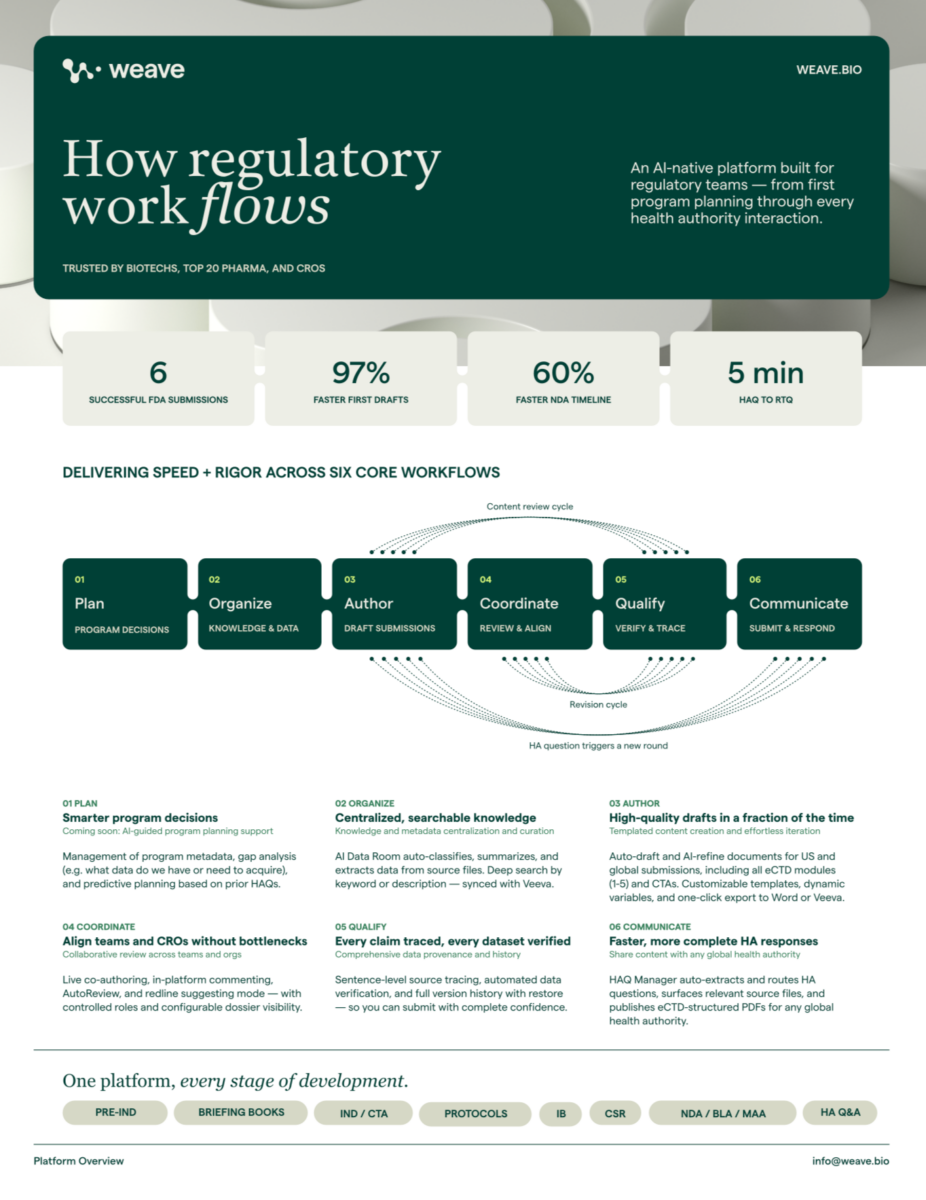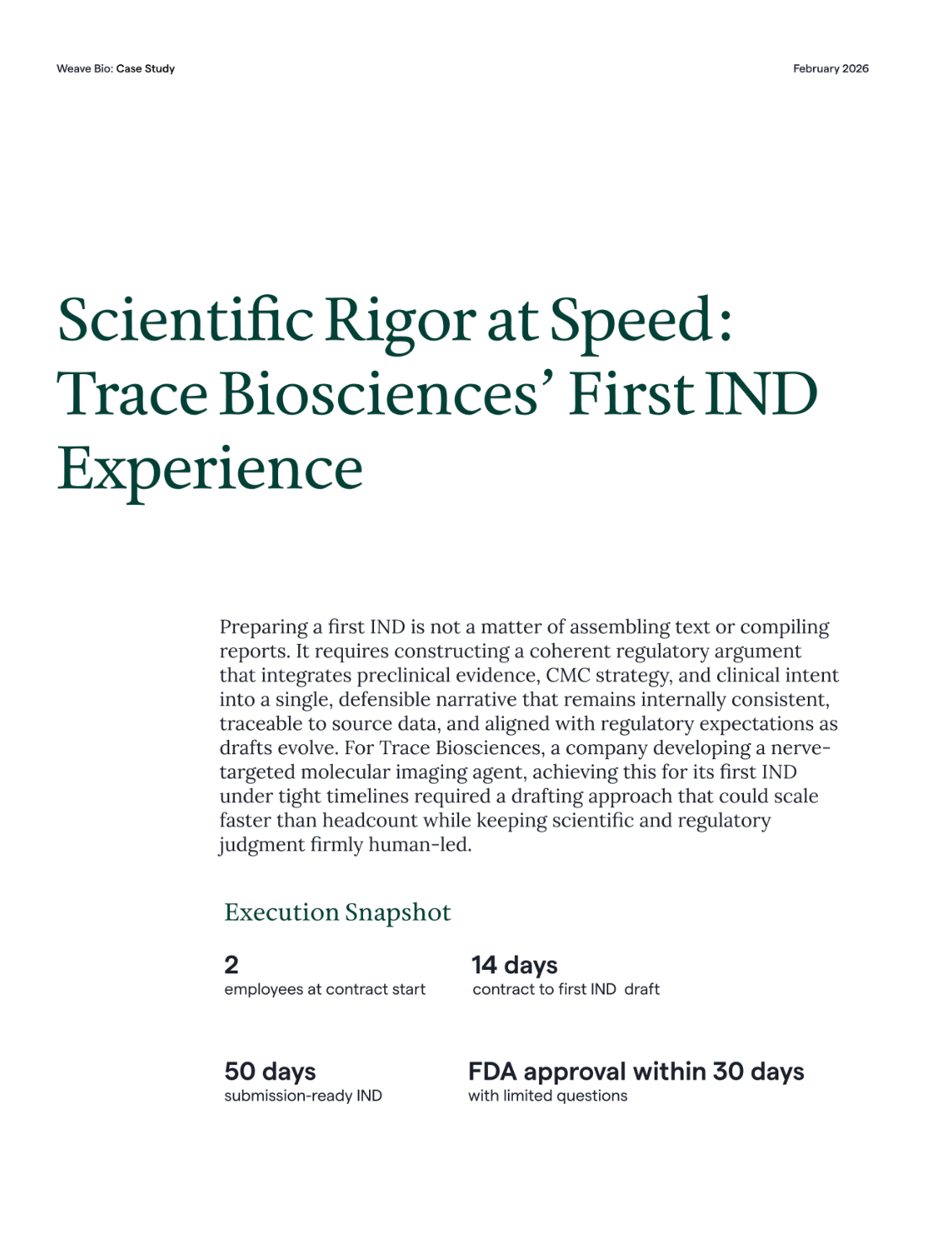
Trace Biosciences recently prepared and submitted its first Investigational New Drug (IND) application while advancing a nerve-targeted molecular imaging agent toward clinical development. As a first-time IND sponsor operating under tight timelines, the team needed a drafting approach that could scale faster than headcount while keeping scientific and regulatory judgment firmly human-led.
As emerging biotech companies prepare their first IND submissions, the challenge is rarely just writing the document. It is coordinating scientific input, maintaining consistency across modules, and ensuring that evolving data remains aligned with regulatory expectations throughout the drafting process.
This case study examines:
- The coordination challenges first-time IND teams face as drafts evolve across technical summaries, narrative sections, and supporting modules
- How structured drafting templates establish shared expectations for scope, detail, and regulatory logic
- The role of AI-assisted drafting in accelerating early content generation and cross-section alignment
- How maintaining human scientific oversight improves iteration speed while preserving accountability for regulatory decisions
For regulatory teams, preparing a first IND is not simply about producing documentation. It requires building a clear, internally consistent regulatory argument that can evolve with new data while remaining aligned with how health authorities review submissions.
Download the full commentary to see how Trace Biosciences prepared and submitted its first IND while reducing drafting and revision time and maintaining expert control over scientific and regulatory decisions.