The Weave
Method
A vision for working with data, not documents.
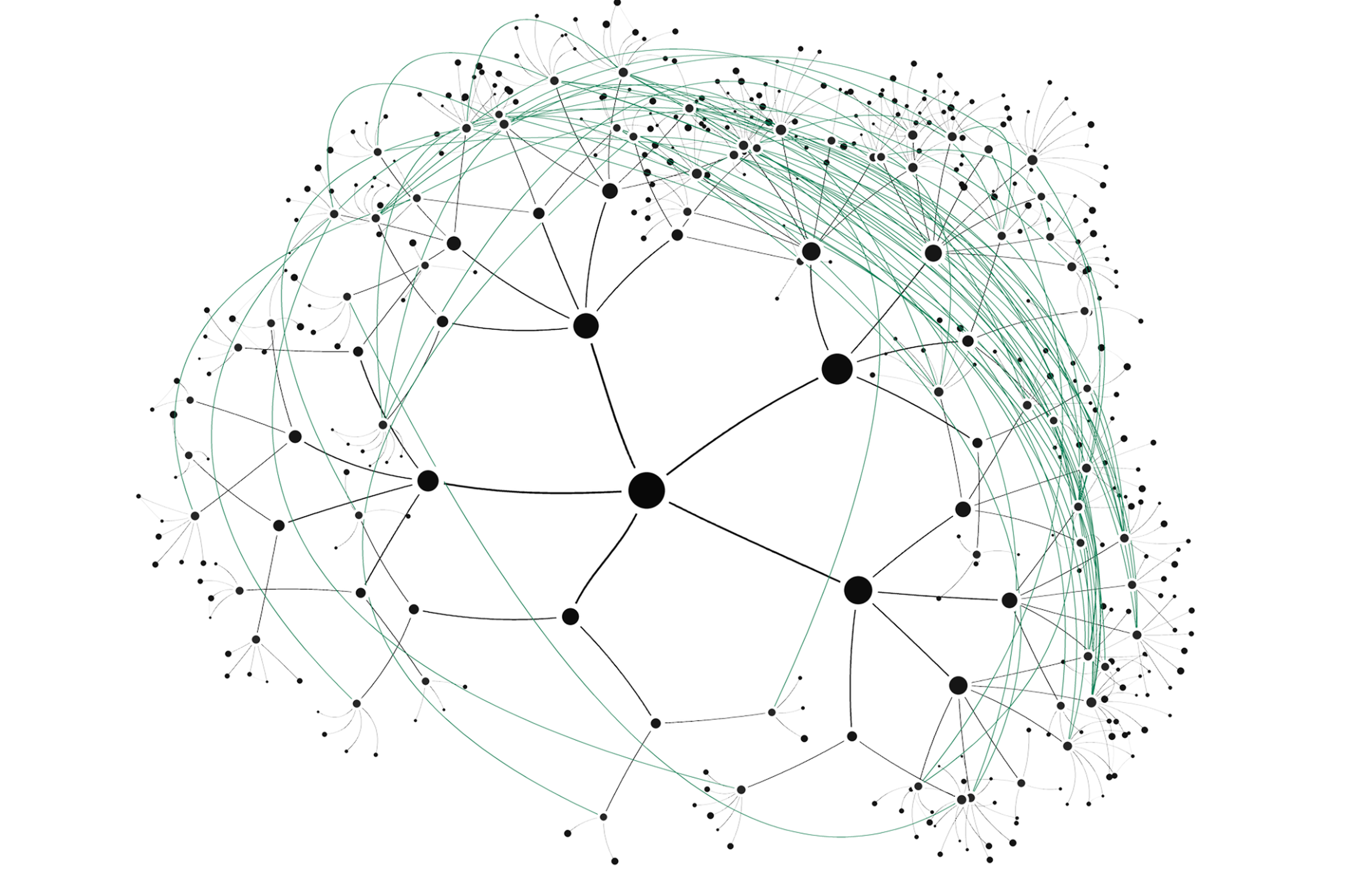
TABLE OF CONTENTS
GOING ALL IN
BEGINNING FROM THE END
2.1
7 PRINCIPLES FOR AI-ENABLED DRUG DEVELOPMENT
CONCLUSION
4.1
The Weave Method
GOING ALL IN
Transformation, not automation
Drug development is a process uniquely positioned to benefit from AI.
As an act of pure knowledge work consisting of constructing complex scientific narratives across diverse subject areas in an exceptionally rigorous (regulated) quality regime, the potential benefits are immense. We estimate drugs could get to market in half the time at twice today’s rate of success once AI has suffused through the lifecycle. For an individual drug, that can mean decades of life-years saved and billions of dollars earned.
But the transformation organizations must undergo to realize these benefits is equally disruptive. The desire to gain from AI without sacrifice is natural, yet superficial automation only checks the box — it doesn’t move the needle. A complete workflow transformation is required.
Here we offer seven principles intended to help organizations navigate this transition. Distilled from our experience with dozens of customers spanning the complete ecosystem of drug development — from biotech to top 20 pharma to global CRO — teams who adopt these principles are leading the industry into a new era of modern drug development.
BEGINNING FROM THE END
Outcomes focused
The aim of drug development is to get effective medicines to patients as rapidly as possible. That is achieved by proving to health authorities that a drug is safe/efficacious and consistently manufacturable, in increasingly persuasive (and costly) phases. This process, at its most distilled, consists of generating, using, and communicating knowledge.
The desired outcomes and essential nature of drug development are unaltered by AI. However, the methods and workflows driving them must be free to evolve, in some cases dramatically, to harness the full potential of the technology.
7 PRINCIPLES FOR AI-ENABLED DRUG DEVELOPMENT
Work directly with knowledge and data
The paperwork in drug development has never been the point. Documents are imperfect containers for knowledge, whose use incurs substantial inefficiency, overhead, and friction. AI enables practitioners to work directly with knowledge and data, eliminating the drags of managing paperwork and navigating document stores.
Own your narrative
Authoring is a means of communicating, but also of thinking. The act of composing a narrative also requires deep understanding of the subject matter and, for scientific content, considerable analysis and interpretation. The need for humans to analyze, understand, and compose these narratives is not obsolesced by AI, it is enhanced. Narratives can be instantly presented to an SME for judgement and refinement; humans can review a dozen potential interpretations of data instead of a handful; understanding can be gained by request rather than document archaeology. All of these create leverage for human judgement, reducing risk and supporting narratives of the highest possible quality.
Content lives in graphs
A defining feature of content in drug development is its deep interconnectedness, with multiple layers of reuse, translation, and transformation commonplace. AI makes it feasible to store all content related to a drug program in a single interconnected graph, providing one source of truth, “always on” consistency and accuracy of content, and perfect traceability.
Objective decision support
Despite the existence of troves of data capable of empowering many different forms of decision-making in the course of drug development, many decisions are still made on opinions, advice, and memory. Valuable data and knowledge forgotten in any of the numerous document repositories is made comprehensively and instantly accessible, grounding decisions in data. The result is an improvement to quality, confidence, and speed with which decisions are made.
Dynamic, interactive HA communication
Most communications between sponsors, health authorities, and other ecosystem players consist of transmission of ponderous, static documents. The receiver must organize, process, and ultimately wade through thousands of pages of verbose prose and irrelevant information to gain understanding, introducing considerable risk of miscommunication and inefficiency in every interaction. AI offers the potential for far more direct, dynamic, and interactive interrogation of data and narratives by all members of the ecosystem.
People direct AI, and hold accountability for it
The role of people in this regime changes meaningfully. In general humans are able to shift to designing outputs and directing work, leaving the AI to execute and present. Crucially, the nature of accountability remains constant: human authors and organizations must thoroughly understand and take responsibility for their own work, regardless of the technology they employed in carrying it out. It is imperative that AI systems and workflows be designed and constructed to support and enforce this principle.
People and AI need purpose-built systems for collaboration
More actors involved in a process only makes a system of collaboration, orchestration, and ground truth more vital. However, all existing software was built exclusively for human use and collaboration on assumptions that no longer hold true, ham-stringing their use by humans and AI together. New systems and modes of interacting are necessary to enable harmonious collaboration between those typing on keyboards and those “living” in the system.
CONCLUSION
What’s next?
The journey of AI transformation is winding, dynamic, and unpredictable. While the outcome may be impossible to foretell, we have complete confidence in this: we will arrive alongside our customers. It was together with our customers that we built the industry’s first AI regulatory submission tooling, and together that we’ve discovered the essential role of a knowledge layer in the industry’s emerging AI infrastructure. More challenges and discoveries await us, and we are committed to building to solve them in service of bringing medicines to patients as fast as possible.